Abortion Black Maternal Health Comprehensive Sex Education Contraception Democracy Health Care International Human Rights Maternal Health Reproductive Justice
Blog: From Brazil to the States — State Legislators Bring Home Lessons on Democracy, Racial Justice, and Reproductive Freedom
In May 2025, SiX and the Women’s Equality Center (WEC), hosted our fifth international delegation to Brazil where we invited a delegation of 6 U.S. state legislators to Brazil to meet with local policymakers, activists, and advocates to share information and build transnational strategies to protect and expand reproductive rights.
This trip comes amidst the global rise in regressive abortion laws, state violence, and democratic erosion in both the U.S. and Brazil.
Participating legislators included:
- Arizona State Senator Analise Ortiz
- Georgia State Representative Jasmine Clark, PhD
- Maryland State Delegate Nicole Williams
- Maryland State Delegate Jheanelle Wilkins
- Massachusetts State Representative Priscila Sousa
- Tennessee State Senator London Lamar
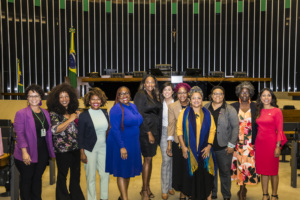
U.S. State Legislators with Members of Brazils National Congress in the Chamber of Deputies
The trip was focused on cross-border learnings to address the shared harm that far-right ideologies inflict on Black, Indigenous, Latine, and other marginalized communities worldwide. At a time when the landscape for reproductive rights is rapidly shifting and when the threat to public health has never been greater, state legislators are now on the frontlines of human rights work.
This trip to Brazil allowed U.S. state legislators to deeply listen, engage, and examine the intersections of reproductive health and democracy from a global racial and economic justice context.
Some of the major themes and learnings from the delegation include:
1. No Healthy Democracy without Reproductive Justice: During Brazil’s redemocratization process in the 1980s, social movements won major victories but abortion rights were left behind as they were deemed politically risky. This exclusion deeply fractured reproductive healthcare access with ongoing impacts falling hardest on Black and Indigenous communities.
Legislators were reminded that the reproductive justice framework is the backbone of a working democracy and any concession to bodily autonomy, care, and safety automatically weakens the foundation of any society. As one Brazilian legislator stated “Democracy passes through the organization of women” and without the ability to control one’s own body, family and future, no individual can meaningfully participate in public life. In the midst of a fragile democracy, the delegation learnt the importance of building power beyond borders in order to strengthen their ability to imagine new systems of care, dignity and democracy from the ground up.
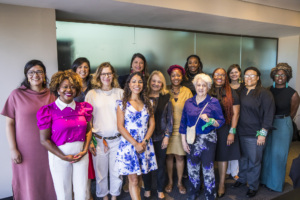
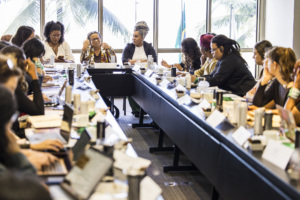
U.S. State Legislators meeting with Brazilian Reproductive Rights and Justice Advocates
2. Global is Local, Local is Global: While state legislators play a critical role in shaping their local policies, this trip helped them to step back and intimately understand how broader systems and strategies in their short-term legislative fights are interconnected in the global fight for human rights.
Legislators gained an intimate understanding of how Western involvement in family planning efforts during Brazil’s dictatorship fostered the public’s mistrust around Long Acting Reversible Contraception (LARC’s), which continues to be shaped by U.S. evangelical influences today.
Both countries share a history of medical racism and elitism shaped by colonial legacies which has informed the deeply stratified access to abortion care in Brazil, paralleling the same dynamics playing out in U.S. states. Legislators understood that many of the same forces behind abortion bans in their states are the same ones trying to ban access globally. This connection created space for legislators and advocates to share blueprints for reproductive freedom.
Legislators came to understand that their role is not only to govern but also to liberate others by collectively holding powerful U.S. right wing actors accountable for exporting harmful misinformation and disinformation strategies that continue to impact Brazil amongst other countries.
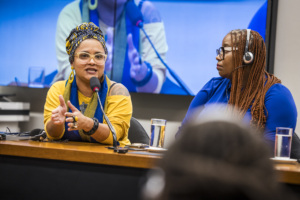

Meeting and Joint Press Conference in Brazils National Congress
3. Building International Solidarity: This trip deepened state legislators’ understanding of the role they play within the international community and served as a profound reminder that the fight for bodily autonomy, gender equity and racial justice justice transcends state and national borders.
The delegation saw how systemic racism, through unequal access to the public healthcare system based on race, class, and zip code, and through political violence, continues to harm Indigenous and Black Brazilians. This deepened their understanding and strengthened their commitment to building international solidarity in the fight against white supremacy. As a Criola member stated: “These deaths are produced. This neglect is intentional genocide.”
While the threats we face in the U.S. are shared globally, so are the solutions. Legislators now carry an international perspective that will inform their work inspired by the collaboration they saw amongst the public healthcare workers, activists and lawmakers in Brazil.
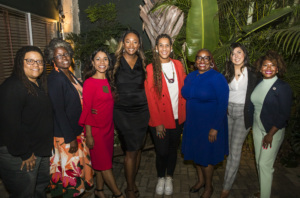

U.S. State Legislators meeting with Anielle Franco, Minister of Racial Equality and Hospital Staff from an Integrated Maternal Healthcare Clinic
How RFLC lawmakers are integrating this global framing into their U.S. work:
These learnings prompted powerful reflections among state legislators on the global backlash against reproductive freedoms and the critical need to embrace a reproductive justice framework as essential to a healthy democracy. The delegation returned home with renewed resolve, a sense of urgency and hope, and concrete tools to advance this work in their own communities, including:
- Framing reproductive justice as essential to public health and democracy;
- Close gaps in access by pairing the passage of proactive policies with meaningful implementation mechanisms, funding, education and accountability;
- Protecting young people’s future by fighting mis/disinformation, protecting confidentiality, and building solidarity with organizations that center children’s rights.
Press Coverage:
- Associated Press: ‘I was terrified I was going to die.’ Rape victims in Brazil struggle to access legal abortions.
- The Nation: Why We Must Keep Talking About Abortion Pills
- Folha de S.Paulo: Agentes usam máscaras ao deter imigrantes, e sensação é quase de sequestro, diz brasileira deputada nos EUA
- The Brazilian Report: How Brazilian courts block or guarantee access to reproductive rights